
Hyperbaric Oxygen Therapy For Cancer
Hyperbaric Oxygen Therapy (HBOT) is used in a range of medical and recovery settings. For people who have experienced cancer, it may sometimes be considered as part of supportive care, particularly when dealing with certain long-term effects of cancer treatment.
At our Hertfordshire-based therapy centre, we provide access to oxygen therapy in a safe, controlled environment. If you are currently receiving cancer treatment or have recently completed treatment, we recommend discussing HBOT with your cancer care team before attending.
Oxygen Therapy may be explored to support:
- Recovery following some cancer treatments
- Tissue healing and repair
- Oxygen delivery to damaged tissues
- Some long-term effects of radiotherapy
- Energy and general wellbeing
- Recovery from wounds or surgery
How Cancer and its Treatment Can Affect the Body
Cancer describes a group of conditions in which abnormal cells grow and divide in an uncontrolled way.
There are more than 200 different types of cancer, and the treatment someone receives will depend on the type and location of their cancer, its stage, and their individual circumstances.
Treatment can include:
- Surgery
- Chemotherapy
- Radiotherapy
- Immunotherapy
- Targeted cancer drugs
- Hormone therapies
Cancer and its treatment can place considerable demands on the body. Some people experience fatigue, pain, changes to their skin and tissues, or other symptoms during and after treatment.
The effects can also continue after cancer treatment has finished. Radiotherapy, for example, can sometimes cause changes to healthy tissues months or years later.
How Hyperbaric Oxygen Therapy Can Support People Affected by Cancer
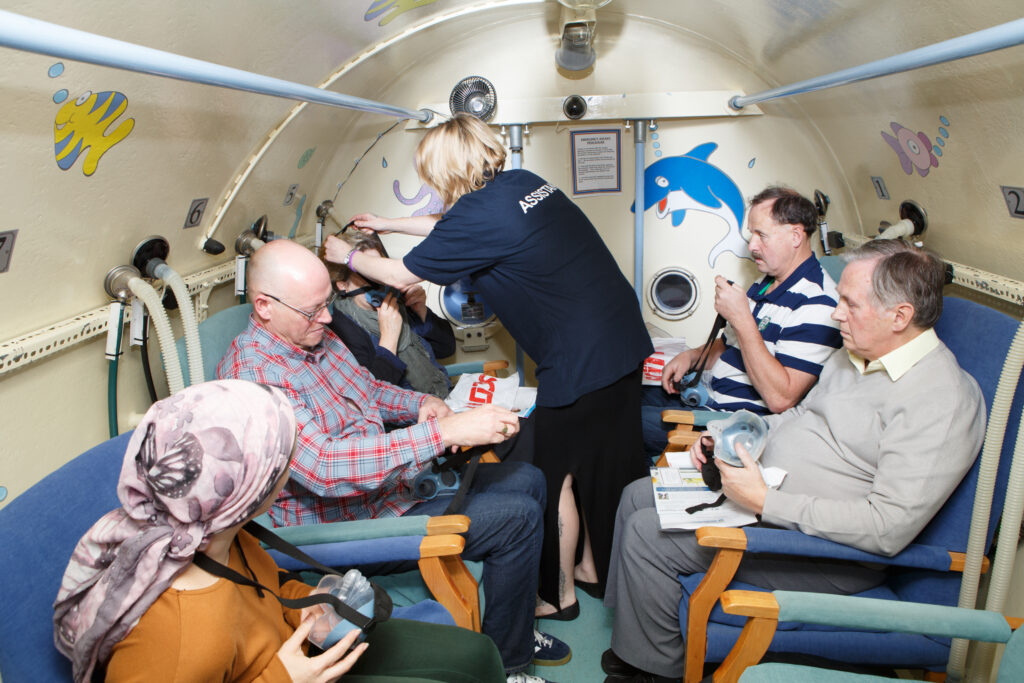
Hyperbaric Oxygen Therapy involves breathing oxygen in a pressurised chamber. This increases the amount of oxygen carried in the blood and allows more oxygen to reach tissues throughout the body.
HBOT is not a treatment for cancer itself.
Its established medical use in cancer care relates primarily to supporting the treatment of certain complications that can occur following cancer therapy, particularly damage to healthy tissue caused by radiotherapy.
Radiotherapy works by damaging cancer cells, but healthy tissue surrounding the treatment area can also be affected. In some people, these changes can persist or develop months or years after treatment.
Increasing oxygen delivery to affected tissues may help support:
- Tissue repair and healing
- The formation of new small blood vessels
- Healing in areas where the blood supply has been affected
- Recovery from certain wounds
- The body’s natural healing processes
Whether HBOT is appropriate will depend on the individual’s circumstances and the effects of their cancer treatment.
Hyperbaric Oxygen Therapy After Radiotherapy
One of the most researched uses of Hyperbaric Oxygen Therapy in people who have previously had cancer is the management of some forms of radiation tissue damage.
Radiotherapy is carefully targeted at cancer cells, but surrounding healthy tissues can sometimes be affected. Long-term effects can include changes to the skin and underlying tissues, fibrosis and, depending on the area treated, problems affecting the bladder, bowel, bones or other structures.
HBOT has been investigated for some of these complications because increasing oxygen availability may help support healing in tissue where the blood supply has been damaged.
However, the evidence is not the same for every radiotherapy complication. HBOT should therefore be considered on an individual basis and discussed with the healthcare professionals responsible for your cancer care.
Potential Benefits for People with Ehlers-Danlos Syndrome
Some people choose to explore Hyperbaric Oxygen Therapy as part of their recovery following cancer treatment. Potential benefits that are sometimes discussed in relation to oxygen therapy include:
- Support for Tissue Healing: HBOT increases oxygen availability in the body’s tissues. This can support natural healing processes, particularly where tissues have been damaged or their blood supply has been affected.
- Support Following Radiotherapy: Hyperbaric Oxygen Therapy has been investigated for certain long-term complications caused by radiation damage to healthy tissues.
- Support for Wound Healing: Some people experience difficult or slow-healing wounds following surgery or cancer treatment. HBOT has established applications in supporting the healing of certain types of difficult wounds.
- Energy and Wellbeing: Fatigue can be a significant issue during and after cancer treatment. Some people attending oxygen therapy describe feeling more energised or experiencing improvements in their general wellbeing, although individual experiences vary.
Hyperbaric Oxygen Therapy does not treat cancer, and these potential benefits should not be interpreted as evidence that HBOT can shrink, cure, or prevent cancer.
Try Oxygen Therapy Following Cancer Treatment
If you are living with the effects of cancer or cancer treatment and would like to learn more about Oxygen Therapy, we would be happy to talk to you.
As a registered charity based in Hertfordshire, we provide access to Hyperbaric Oxygen Therapy in a safe, welcoming environment.
We are proud to operate the only group Hyperbaric Oxygen Therapy chamber in Hertfordshire.
If you are currently receiving cancer treatment, your oncology team should remain your first point of contact for decisions about your cancer care. Oxygen Therapy should complement appropriate medical care, never replace it.
Research into Cancer & Hyperbaric Oxygen Therapy
Research involving cancer and HBOT has largely focused on the effects of cancer treatment rather than treating cancer itself.
One area of particular interest is delayed radiation injury. Radiotherapy can sometimes cause long-term changes to healthy tissues because of damage to blood vessels and reduced blood supply within the treated area.
HBOT has been studied as a way of increasing oxygen availability within these tissues and supporting the healing process.
Research is continuing, and evidence varies considerably depending on the type of radiation injury or complication being treated.
There is currently no established evidence that Hyperbaric Oxygen Therapy should be used as a replacement for conventional cancer treatments such as surgery, chemotherapy, radiotherapy, immunotherapy or targeted medicines.
References
Cancer & Oxygen Therapy FAQs
No. Hyperbaric Oxygen Therapy is not a treatment or cure for cancer. Cancer should be treated by your specialist cancer team using clinically appropriate treatments.
HBOT may sometimes be considered for certain complications following cancer treatment, particularly some forms of radiation-related tissue damage. It works by increasing the amount of oxygen reaching tissues and supporting natural healing processes.
Hyperbaric Oxygen Therapy has been studied for certain forms of delayed radiation tissue damage. Whether it is appropriate depends on the type and location of the damage and your individual circumstances.
If you are currently receiving chemotherapy, radiotherapy, immunotherapy or another cancer treatment, you should discuss Hyperbaric Oxygen Therapy with your oncology team before attending.
This is an understandable concern. HBOT increases oxygen availability within the body’s tissues, but it should not be viewed as either a treatment for cancer or something to use independently of your oncology care. If you are undergoing cancer treatment, your oncology team can advise whether HBOT is appropriate for your individual circumstances.
You can contact us directly to discuss Oxygen Therapy. If you are currently undergoing cancer treatment or have concerns relating to your cancer history, we may recommend speaking to your cancer care team before starting.
Find out more about Oxygen Therapy and Cancer
The full name of this therapy, Hyperbaric Oxygen Therapy, is quite a mouthful, so usually we just call this Oxygen Therapy. It is the same thing when we say that here. But that word Hyperbaric is very useful for Googling on, along with any condition or symptom you are interested in.
For example, you can Google on Hyperbaric Cancer or Hyperbaric Cancer Research or on Hyperbaric and your type of cancer or Hyperbaric and the symptoms that affect you most. For example, Hyperbaric Fatigue.
Many benefit from Chris Woollams at Cancer Active. He is positive about Hyperbaric Oxygen Therapy too.
Higher levels of oxygen often result in less pain, more energy and less brain fog. That is for a wide range of conditions. Including cancers. There are other benefits too but these are the three top results.
Oxygen Therapy is antibiotic, antimicrobial, antiseptic and amazing. That’s why oxygen is good for you!